







Protege DIN Rail
8 Input Expander
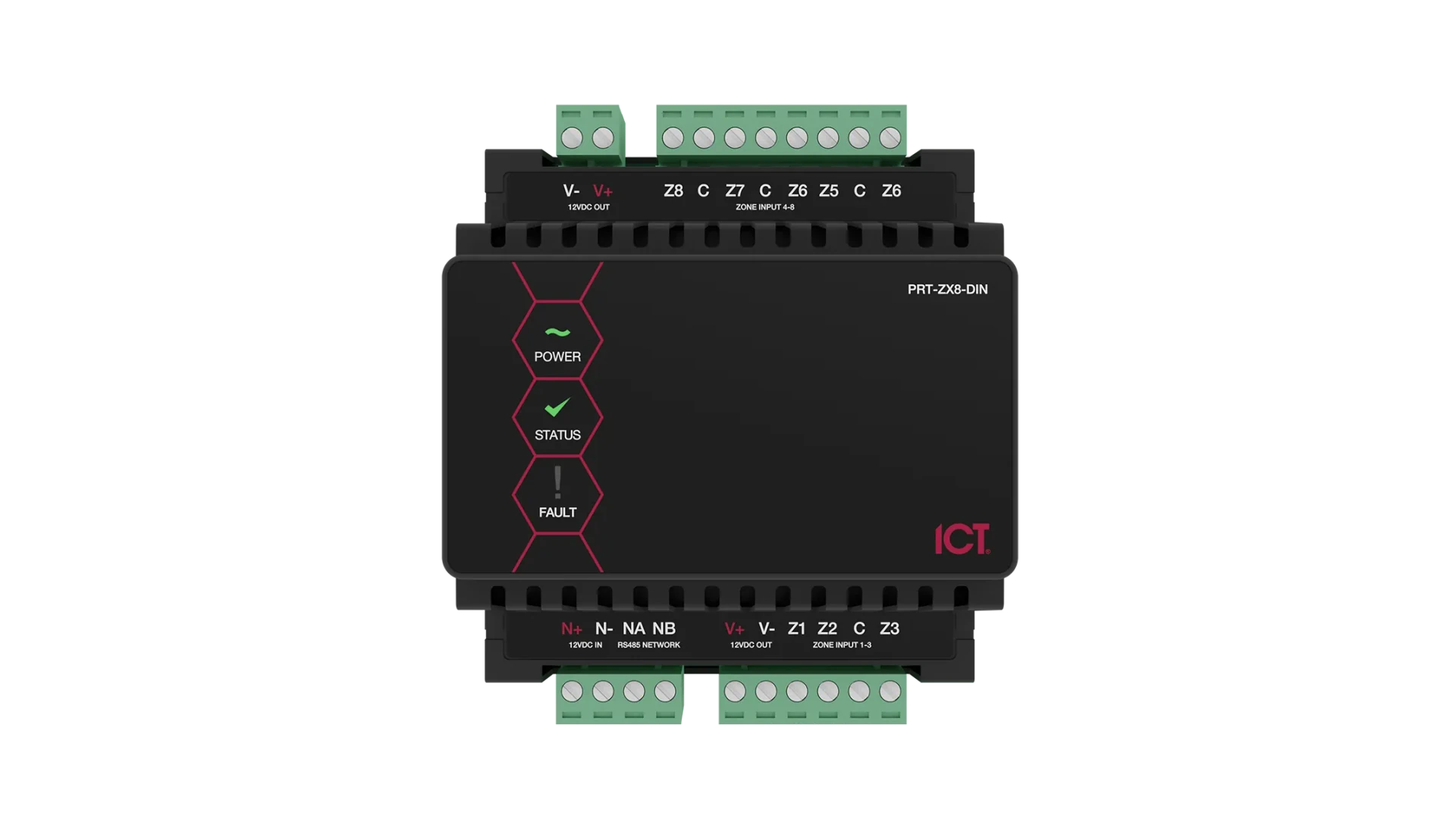
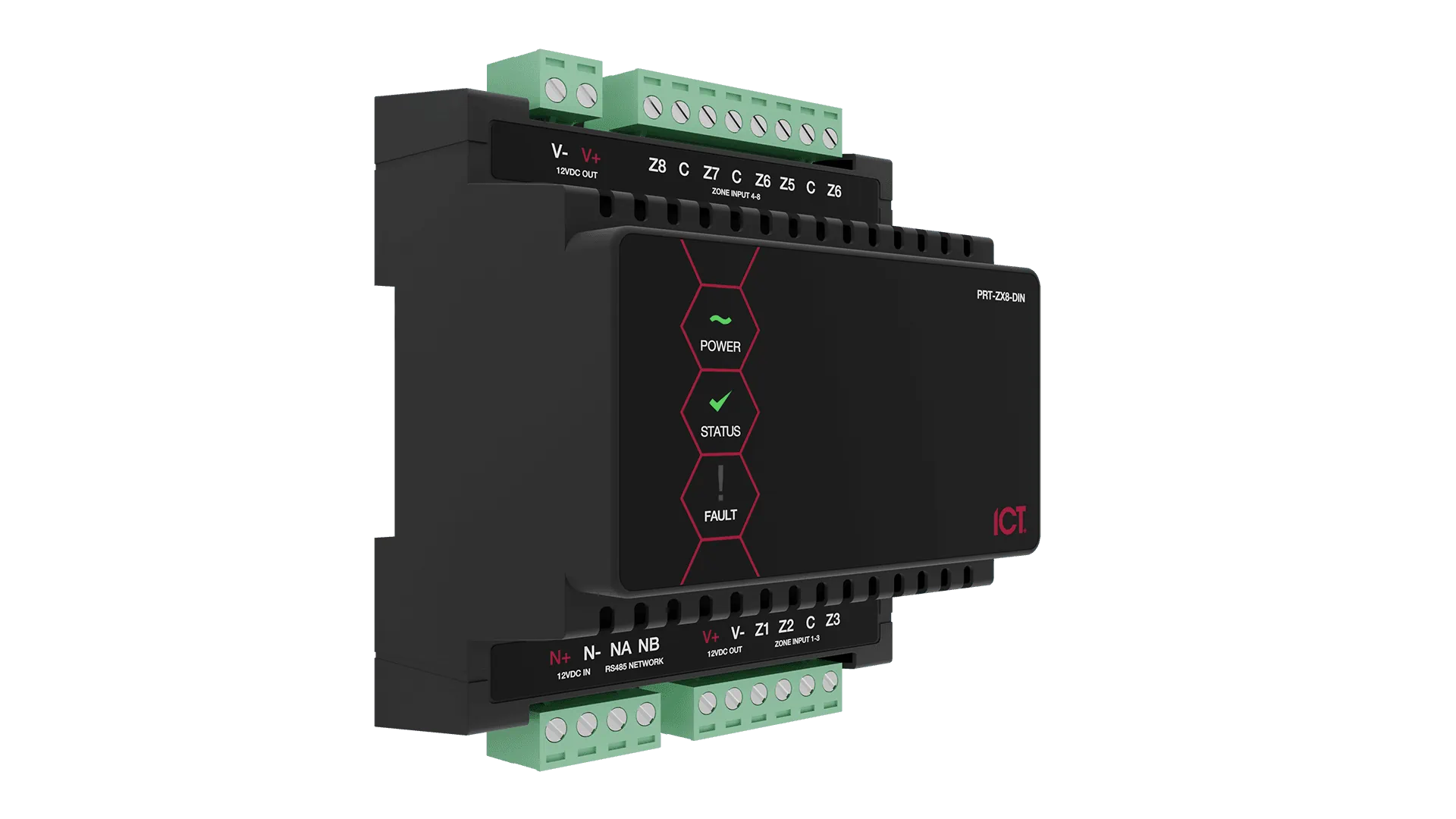
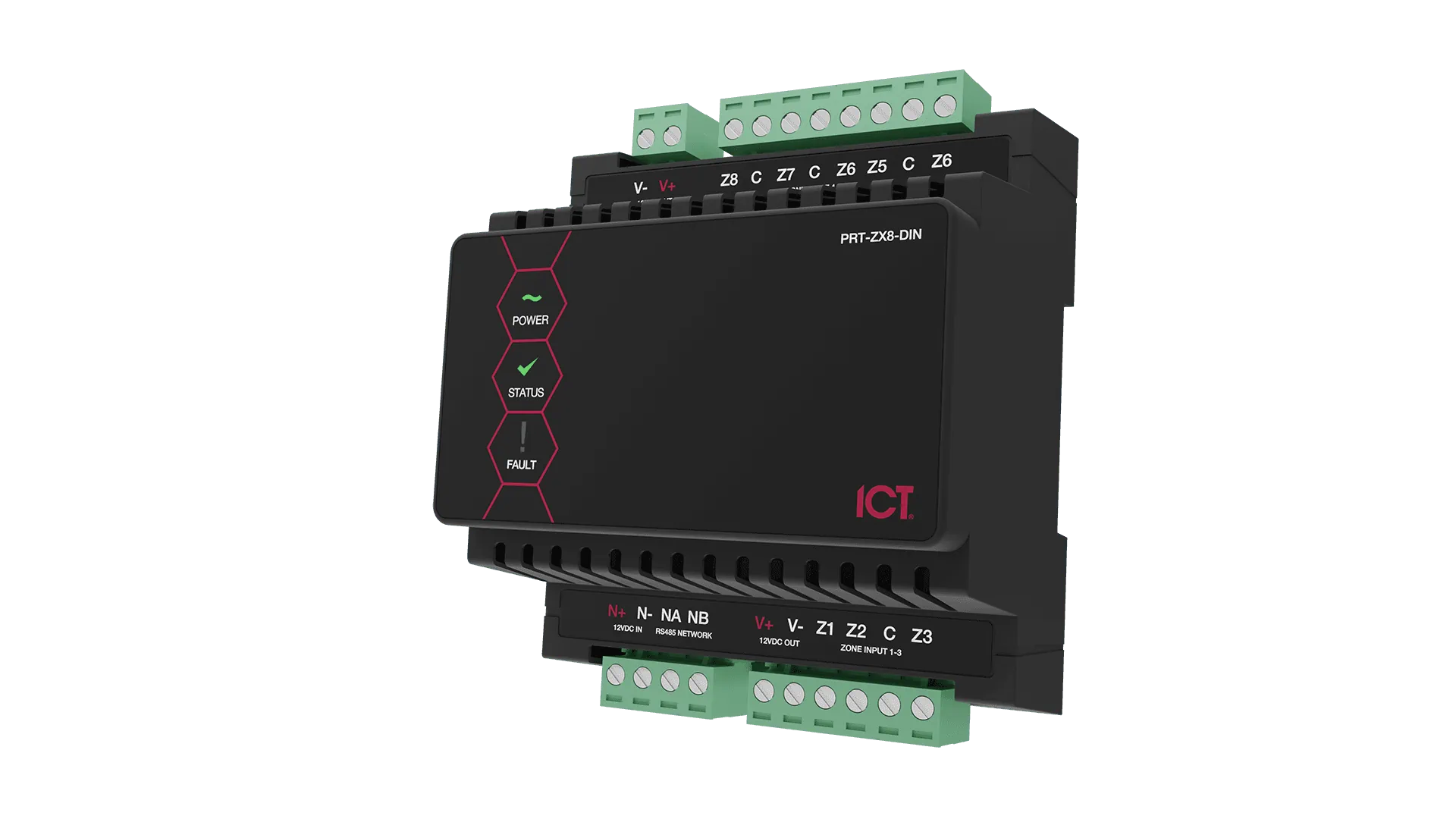
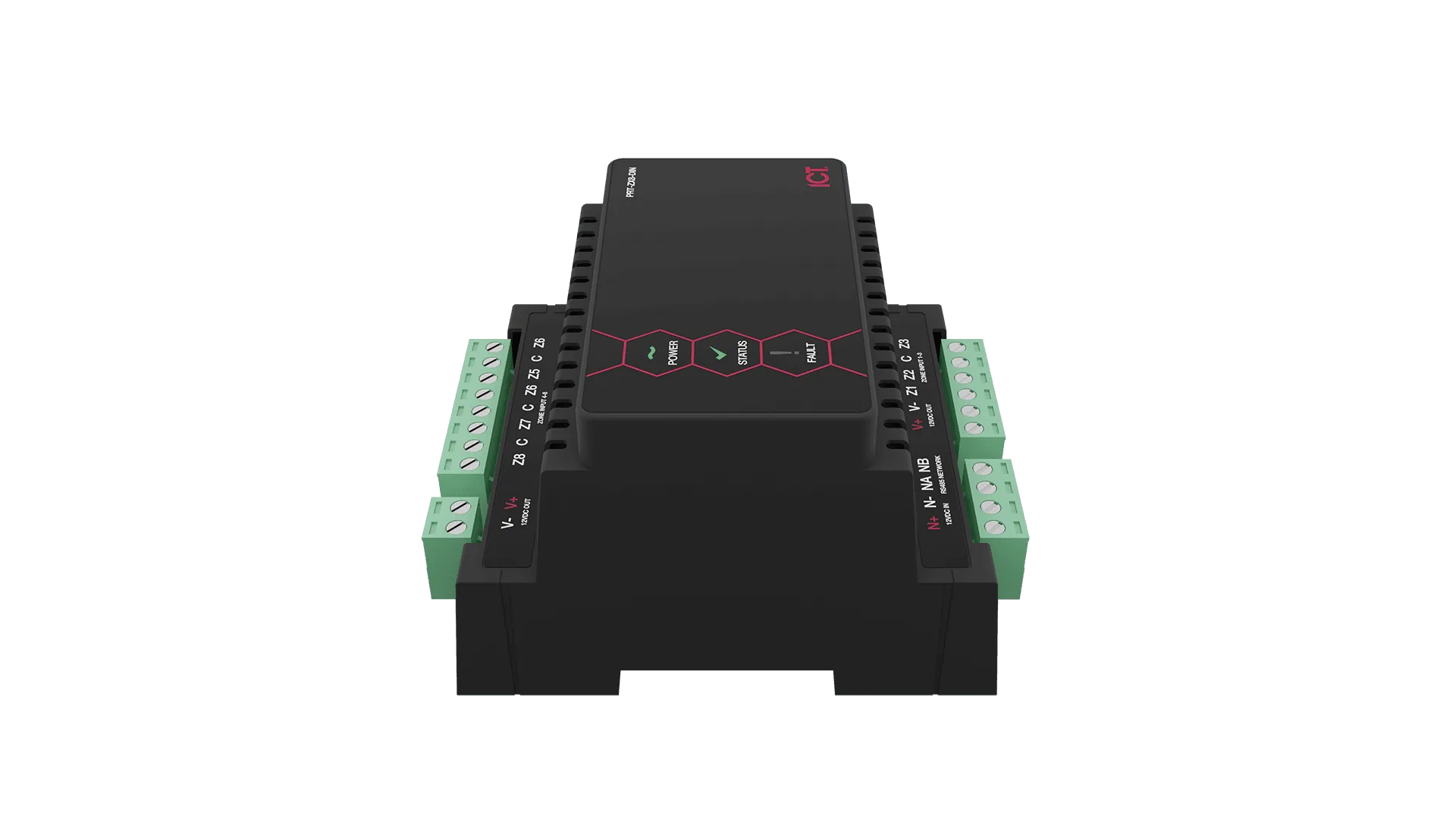
PRT-ZX8-DIN
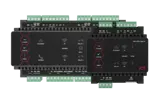
The Protege DIN Rail 8 Input Expander provides an additional 8 inputs (16 if using Input Duplex mode) for monitoring and automation in the Protege system. With inputs that can be used for extended monitoring functionality, the Input Expander provides extensive hardware advancements that allow flexible input programming and configuration, and is designed for use with industry standard DIN Rail mounting.
- 8 monitored inputs
- 4 state input alarm using resistors to provide short, alarm, closed and tamper conditions
- Connect any combination of normally closed or normally open inputs, configurable per input
Features
Connectivity and System Expansion
Extending the Protege system with local inputs and outputs allows convenient, cost-effective expansion with the following additional benefits:
- 8 inputs (16 with Input Duplex mode) can be assigned to any 4 areas in the system each being processed using different options or features
- Address configuration is achieved using the address programming feature of the Protege System Controller
Communication
A single RS-485 communication interface port used for all network communication functions and interconnection to other modules.
Power Supply
Device power is supplied from a 12VDC input. Ultra low current requirements ensure cost-effective power distribution.
Upgradable Firmware
Utilizing the latest flash technology and high performance communication mediums, the firmware can be updated via the Protege interface.
Specifications
| Ordering Information | |
| PRT-ZX8-DIN | Protege DIN Rail 8 Input Expander |
| Power Supply | |
| DC Input Voltage | 11-14VDC |
| DC Output Voltage | 10.83-14.0VDC 0.7A (typical) electronic shutdown at 1.1A |
| Operating Current | 50mA (typical) |
| Total Combined Current* | 1.5A (max) |
| Low Voltage Cutout | 8.7VDC |
| Low Voltage Restore | 10.5VDC |
| Communication | |
| RS-485 | Isolated module network |
| Inputs | |
| Inputs | 8 high security monitored inputs (10ms to 1hr input speed programmable) 16 if using input duplex mode |
| Trouble Inputs | 16 |
| Dimensions | |
| Dimensions (L x W x H) | 78.4 x 90 x 44.1mm (3.08 x 3.54 x 1.73") |
| Net Weight | 160g (5.6oz) |
| Gross Weight | 230g (8.1oz) |
| Operating Conditions | |
| Operating Temperature | UL/ULC 0° to 49°C (32° to 120°F) : EU EN -10° to 55°C (14° to 131°F) |
| Storage Temperature | -10° to 85°C (14° to 185°F) |
| Humidity | 0%-93% non condensing, indoor use only (relative humidity) |
| MTBF | 784,316 hours (calculated using RFD 2000 (UTE C 80-810) Standard) |
Downloads
User Documentation
Firmware
Supporting Material
Certifications & Warranties
Regulatory Notices
RCM (Australian Communications and Media Authority)
This equipment carries the RCM label and complies with EMC and radio communications regulations of the Australian Communications and Media Authority (ACMA) governing the Australian and New Zealand (AS/NZS) communities.
CE - Compliance with European Union (EU)
Conforms where applicable to European Union (EU) Low Voltage Directive (LVD) 2014/35/EU, Electromagnetic Compatibility (EMC) Directive 2014/30/EU, Radio Equipment Directive (RED) 2014/53/EU and RoHS Recast (RoHS2) Directive: 2011/65/EU + Amendment Directive (EU) 2015/863.
This equipment complies with the rules, of the Official Journal of the European Union, for governing the Self Declaration of the CE Marking for the European Union as specified in the above directives.
UL/ULC (Underwriters Laboratories)
UL1610 for Central-Station Burglar-Alarm Units
UL294 for Access Control System Units
CAN/ULC S304 for Signal Receiving Centre and Premise Burglar Alarm Control Units
CAN/ULC S559 for Fire Signal Receiving Centers and Systems
UK Conformity Assessment (UKCA) Mark
This equipment carries the UKCA label and complies with all applicable standards.
Industry Canada
ICES-003
This is a Class A digital device that meets all requirements of the Canadian Interference-Causing Equipment Regulations.
CAN ICES-3 (A)/NMB-3(A)
Federal Communications Commission (FCC)
FCC Rules and Regulations CFR 47, Part 15, Class A.
This equipment complies with the limits for a Class A digital device, pursuant to Part 15 of the FCC rules. Operation is subject to the following two conditions: (1) This device may not cause harmful interference; (2) This device must accept any interference received, including interference that may cause undesired operation.